
If you’ve started looking into the Everest Base Camp trek cost breakdown, you’ve probably noticed that the prices seem to vary wildly.
One company quotes $1,400. Another asks $4,000. Both might be offering a roughly two-week trek along the same trail.
So what explains the difference?
Mostly, it’s what’s included. Some packages cover almost everything you’ll spend on the trail, while others leave you paying for meals, accommodation, flights, permits and extras separately. And once you’re at altitude, even small expenses can add up surprisingly quickly.
I asked a Kathmandu-based trekking agency to break down the typical costs involved in an Everest Base Camp trek. Here’s what you can expect to spend, what a standard package should include, and which expenses are easy to overlook when you’re putting together your budget.
How Much Does the Everest Base Camp Trek Cost in Total?
The Everest Base Camp trek costs $1,400 to $2,500 per person on a standard guided package, and $3,000 to $5,500 on a luxury trip with upgraded lodges or a helicopter return. International flights to Nepal are not included in either figure.
Here is what makes up that price across a standard 14-day trip with 12 days of walking.
| Line item | What it costs | Standard | Luxury |
| Permits | $40 | Included | Included |
| Lukla flight, return | $430 to $520 | Included | Included |
| Teahouse beds, 12 nights | $90 to $140 | Included | Included |
| Meals on the trail | $300 to $450 | Included | Included |
| Guide and porter | $700 to $860 | Included | Included |
| Kathmandu hotels | $40 to $80 | Included | Upgraded |
| Drinks, showers, tips, extras | $250 to $400 | Paid by you | Paid by you |
| Total | $1,400 to $2,500 | $3,000 to $5,500 |
Flights to Kathmandu run between $600 and $1,500 depending on where you start, so a US or UK trekker on a standard package should think of the true all-in number as closer to $3,000 to $4,000.
What Do the Everest Base Camp Permits Cost?
Everest Base Camp permits cost NPR 6,000 in total, roughly $40. There are two of them, both NPR 3,000, and you do not need a TIMS card.
You need the Sagarmatha National Park entry permit and the Khumbu Pasang Lhamu Rural Municipality permit. The Khumbu fee rose from NPR 2,000 in September 2024, so plenty of older guides and agency pages still quote the wrong number.
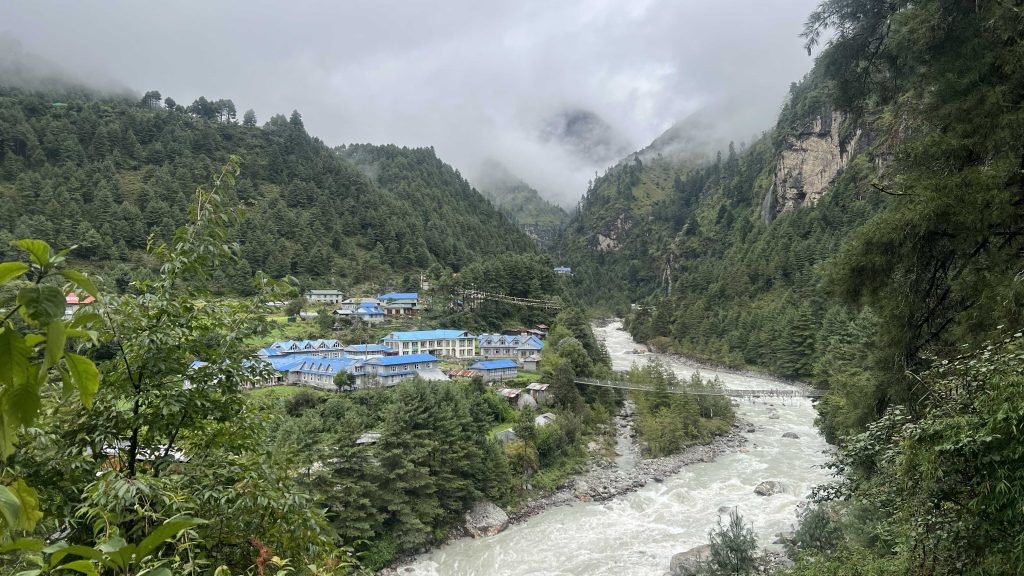
Any decent agency arranges both for you before departure, and the cost is inside your package price. Your guide will have them ready at the Monjo checkpoint, so you are not digging through your bag.
One thing worth knowing: there is no TIMS card on this route. The Khumbu municipality dropped that requirement years ago. If anyone tries to bill you NPR 2,000 for one, that is a fee you do not owe.
How Much is the Flight to Lukla?
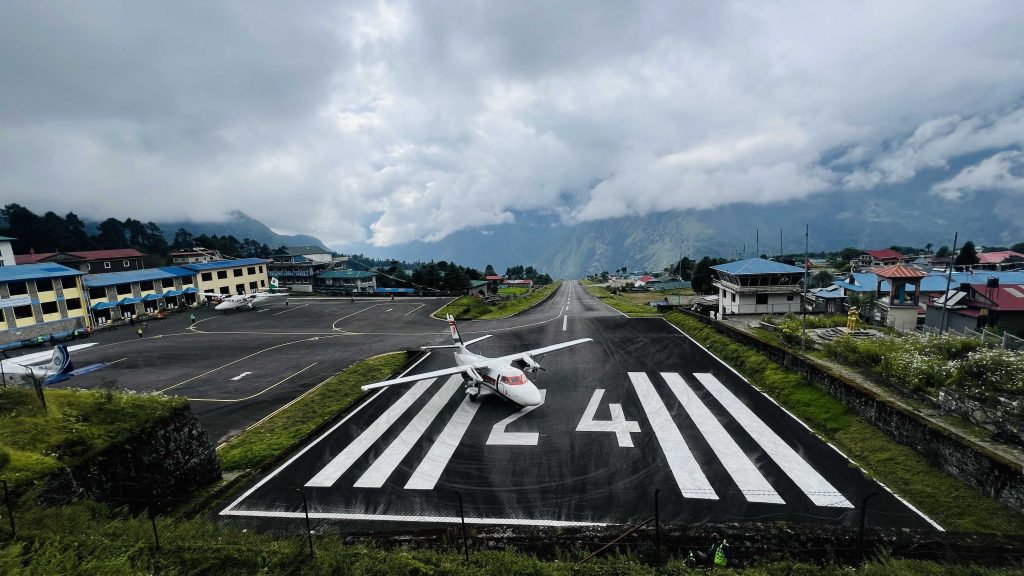
The Kathmandu to Lukla flight costs $215 to $260 each way for foreign nationals, so $430 to $520 return. It is the biggest single line item inside your package.
There is a wrinkle that surprises a lot of trekkers. In peak season, from mid-March to mid-May and mid-September to mid-December, Lukla flights move out of Kathmandu to Manthali Airport in Ramechhap to ease air traffic. The seat drops to around $175 to $200, but you add a jeep transfer and a five-hour drive that leaves Thamel at one o’clock in the morning.
Two more numbers to plan around. Sometimes flights can be delayed or cancelled due to weather, so build two or three spare days into the end of your trip before booking your flight home.
If you get stuck, a shared helicopter seat out of Lukla runs about $500 per person one way, and helicopters fly in conditions that keep small planes grounded. That is an extra cost, not part of your package, but it saves the trek.
What Will You Pay for a Teahouse Bed Each Night?
Teahouse beds on the Everest Base Camp trail cost $3 to $7 a night in the lower villages and $11 to $15 at Gorakshep. Accommodation is the cheapest part of the trek.
- Phakding, Monjo, Namche: NPR 400 to 900, about $3 to $7
- Dingboche, Lobuche: NPR 1,000 to 1,500, about $7 to $11
- Gorakshep: NPR 1,500 to 2,000, about $11 to $15
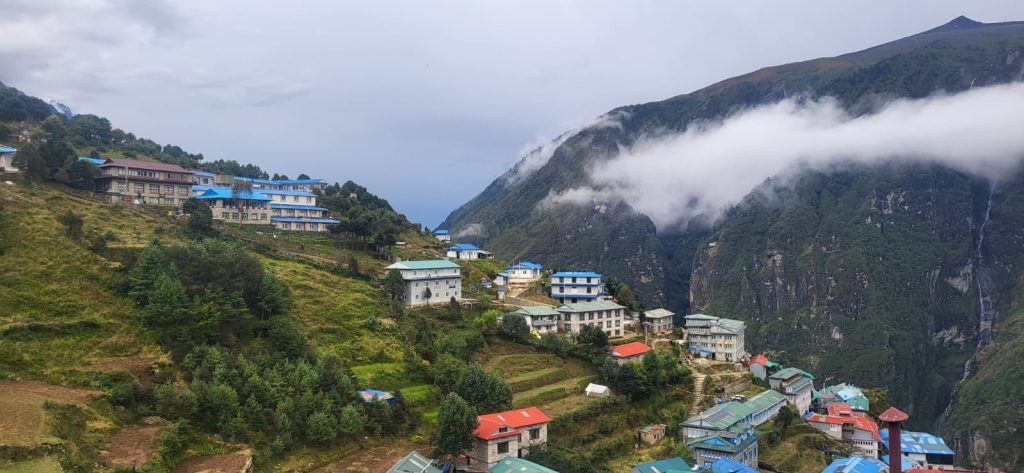
Rooms are twin-share and unheated, with foam mattresses and single-pane windows. Above Dingboche, the dining room with the stove going is the only warm space in the building. Teahouse families make their living from the kitchen rather than the bedroom, which is why the beds are so cheap.
A private single room across the whole trek is roughly a $150 upgrade on a standard package. In Lobuche and Gorakshep, it has to be booked well ahead, because there are only five or six lodges up there.
How Much Should You Budget for Food and Water?
Food on the Everest Base Camp trek costs $25 to $40 a day and climbs steadily with altitude. In a package, your three meals are covered, so this figure mainly applies to drinks and snacks.
Daily food cost by stretch of trail:
- Lukla and Phakding: NPR 600 to 900 for three meals
- Namche: NPR 800 to 1,200
- Dingboche and Lobuche: NPR 1,500 to 2,500
- Gorakshep: NPR 2,500 to 4,000
Everything above Lukla arrives on a porter’s back or a yak, which is why the same plate of dal bhat costs $5 low down and $12 at Gorakshep. It is still the best value on any menu, with free refills on the rice and lentils in most lodges, and it is what the guides eat themselves at altitude.
Water is the one that catches people out. Boiled water is sold by the litre and costs around NPR 450 a litre at Gorakshep, and you need three to four litres a day. Drinks are almost never included in a package. Bring purification tablets or a filter bottle like my personal favorite, the Lifestraw Go. Then you can treat the free tap water instead, and save yourself $100 or more while keeping a lot of plastic off the mountain.
What do Guides and Porters Cost?
A licensed guide costs $30 to $40 a day and a porter $25 to $30, so roughly $700 to $860 across twelve days. Both are inside a standard package price.
That rate should cover the person’s wage, their insurance, their food, and their lodging. If a quote comes in far below it, someone downstream is absorbing the difference, and it is not the agency. Ask what the guide is paid before you book, because a suspiciously cheap trek is usually cheap for a reason.
Porters carry up to a 20 kg (40lb) limit, normally split between two trekkers, and you carry a daypack. Guides on the better agencies have worked the same route for years rather than seasons, which matters more than you might think, especially when the weather turns.
Altitude is where the money is earned. A good guide carries a pulse oximeter and checks your oxygen saturation twice a day from Namche onward. This is how problems get caught early rather than turning into helicopter evacuations.
Is It Cheaper to Rent or Buy Trekking Gear in Kathmandu?
Renting is much cheaper. A down jacket and a sleeping bag rent for around $15 each for the whole trek, against several hundred dollars to buy either one new.
Smaller kit like trekking poles and microspikes goes for about $1 a day through an agency office, and Thamel shops rent at similar rates, though quality varies, so test every zipper and snap before you hand over a deposit.
Buy your own boots, socks, and base layers, and wear the boots in at home. Blisters at 4,000 m (13,100 ft) are miserable, and no rental shop can fix them.
What Does an Everest Base Camp Package Include, and What Does It Leave Out?
A standard package covers permits, Lukla flights, a guide, a porter, twelve nights in teahouses, three meals a day, and your Kathmandu hotels. It leaves out drinks, showers, charging batteries like your phone or camera, tips for guides and porters, and travel insurance.
A well-run 14-day all-inclusive Everest Base Camp package also absorbs the things you cannot plan for: a rebooked flight when Lukla closes, a room held in Gorakshep in October, and a guide paid in full whether you reach base camp or turn back at Lobuche.
Book direct with a Kathmandu agency rather than an international outfitter. The international companies subcontract the whole thing to the Nepali operators anyway, and they add 30% or more for making the introduction. So keep the money local and support a Nepalese organization directly.
Read the exclusions list properly before you pay. The gap between a $1,400 package and a $2,000 one is usually not the trail. It is whether staff insurance, airport transfers, gear rental, and a pre-trek briefing are in the price or quietly missing from it.
Which Extra Costs Catch Trekkers Out?
The usual extras are showers, charging, Wi-Fi, tips, and insurance. Together, they add $250 to $400 across two weeks, on top of your package.
- Hot showers: $3 to $5, more as you climb, because the gas is carried in.
- Charging: Unless you plan to take a total digital detox, you’ll need to charge your phone and camera batteries. It costs $3 to $5 per item above Namche. Or you can buy a 20,000 mAh power bank for less than $30 in Kathmandu, and it pays for itself by the time you get to Dingboche.
- Wi-Fi: $2 to $5 an hour in teahouses. An Everest Link card is a better value at $20 to $25 for 10 GB, though the signal is patchy.
- Bakeries: Namche and Dingboche both have one, at 4,410 m in Dingboche’s case. Budget for those much-needed sweet treats!
- Tips: You’ll want to consider something around 10% of the trip cost to your guide and 5% to your porter, at the end, depending on the size of the group you’re in and the level of service you had.
- Insurance: $150 to $350 for cover, including helicopter evacuation to 6,000 m. Standard policies rarely include it, and an unassisted rescue can cost $5,000.
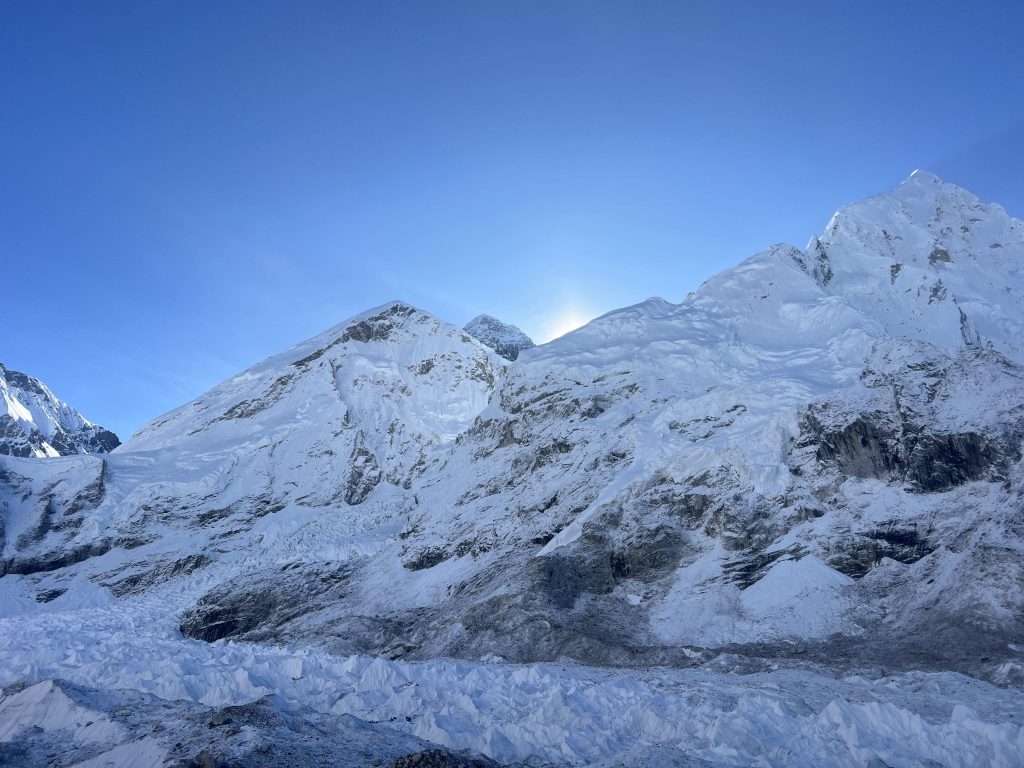
Check the altitude limit, not the marketing page, and buy a higher band if you are tacking on a climbing peak. Island Peak, the 6,189 m summit that closes the valley behind Dingboche and the usual first climb for trekkers who want one, sits just above the standard 6,000 m ceiling.
How Much Cash Should You Carry on the Trail?
Carry $200 to $300 in Nepali rupees for a packaged trek. The last reliable ATM is in Namche, and above it, everything is cash only.
With beds and meals covered, your cash goes on drinks, hot showers, charging, Wi-Fi, bakery stops, and tips at the end.
Change money in Kathmandu, where rates are better, and ask for small notes. A lodge at 4,900 m will not have change for a NPR 1,000 bill at breakfast. Split the cash between your daypack, your duffle, and a money belt.
How Can You Cut the Cost of the Trek?
- Walk in shoulder season. Late September and early December bring lower prices, thinner crowds, and much the same views.
- Join a group departure rather than booking a private trip. The guide and porter cost is shared.
- Book direct with a Nepali agency and skip the 30% foreign markup.
- Treat your own water. The single biggest saving on the trail is at $100 or more.
- Rent your gear in Kathmandu. $15 for a down jacket beats $300 for one you will wear once.
- Carry snacks from Kathmandu. Chocolate and chips cost several times more than in Namche. And after all of that hiking each day, you’re going to want snacks.
The Realistic Number
For most people, a fortnight to Everest Base Camp costs $1,400 to $2,500 on the ground, plus flights to Nepal and up to $350 for insurance that actually covers you. For the highest mountain on earth, that still strikes me as remarkably reasonable.
What did your Everest budget come to in the end? Let me know in the comments below.