

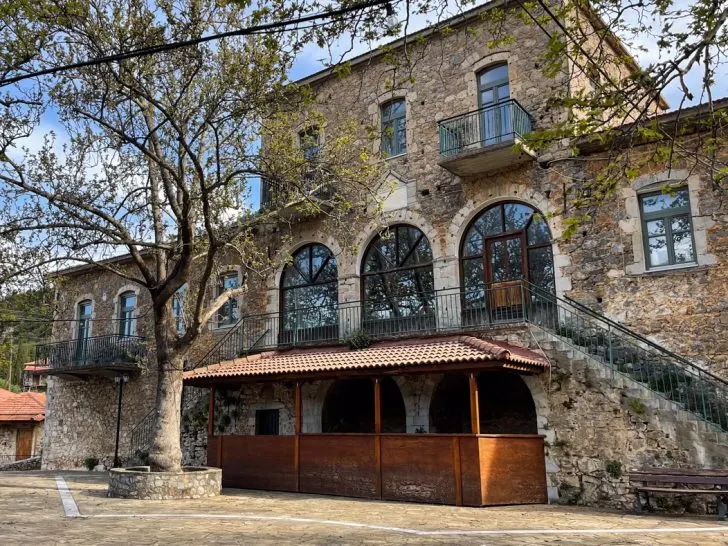
In the mountains of the Peloponnese, there is a town called Tsintsina. 70 years ago, this was a bustling town full of people. There was a thriving school, restaurants lining the main street, and a church where families worshipped each Sunday morning, pouring out into the sunshine of the main square after mass.
I saw it for the first time from above. I had hiked up to the nearby chapel of Saint John the Baptist. Carved into the mountainside, it’s really more of a cave than a church, but the views from here are breathtaking, not just because of the steep climb at high altitude. The cluster of red roofs and sand-colored stones are nestled into the lush green mountains surrounding it.

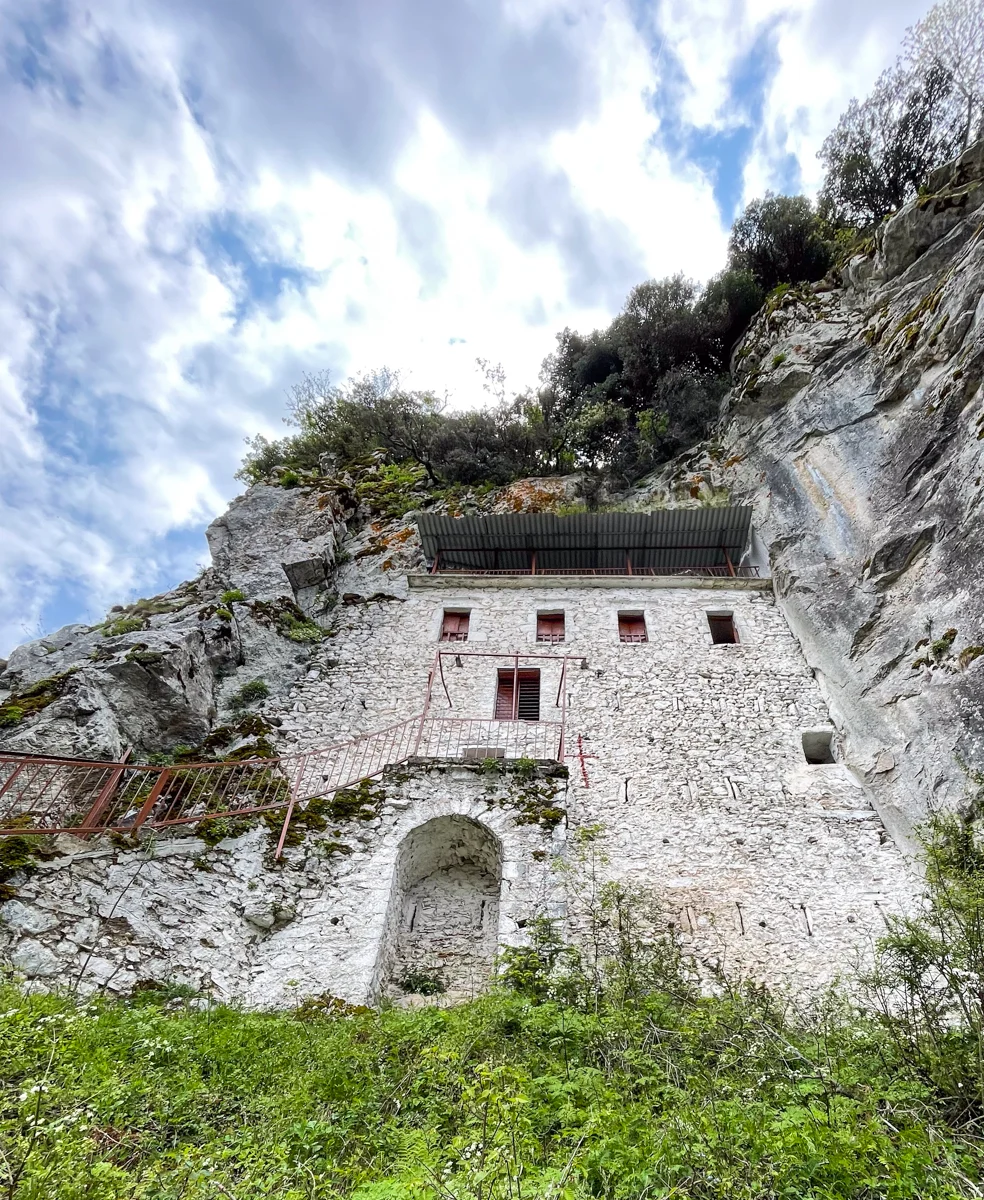
Saint John the Baptist chapel is tucked into the side of the mountains outside of Tsintsina and is well worth visiting while you’re in town.

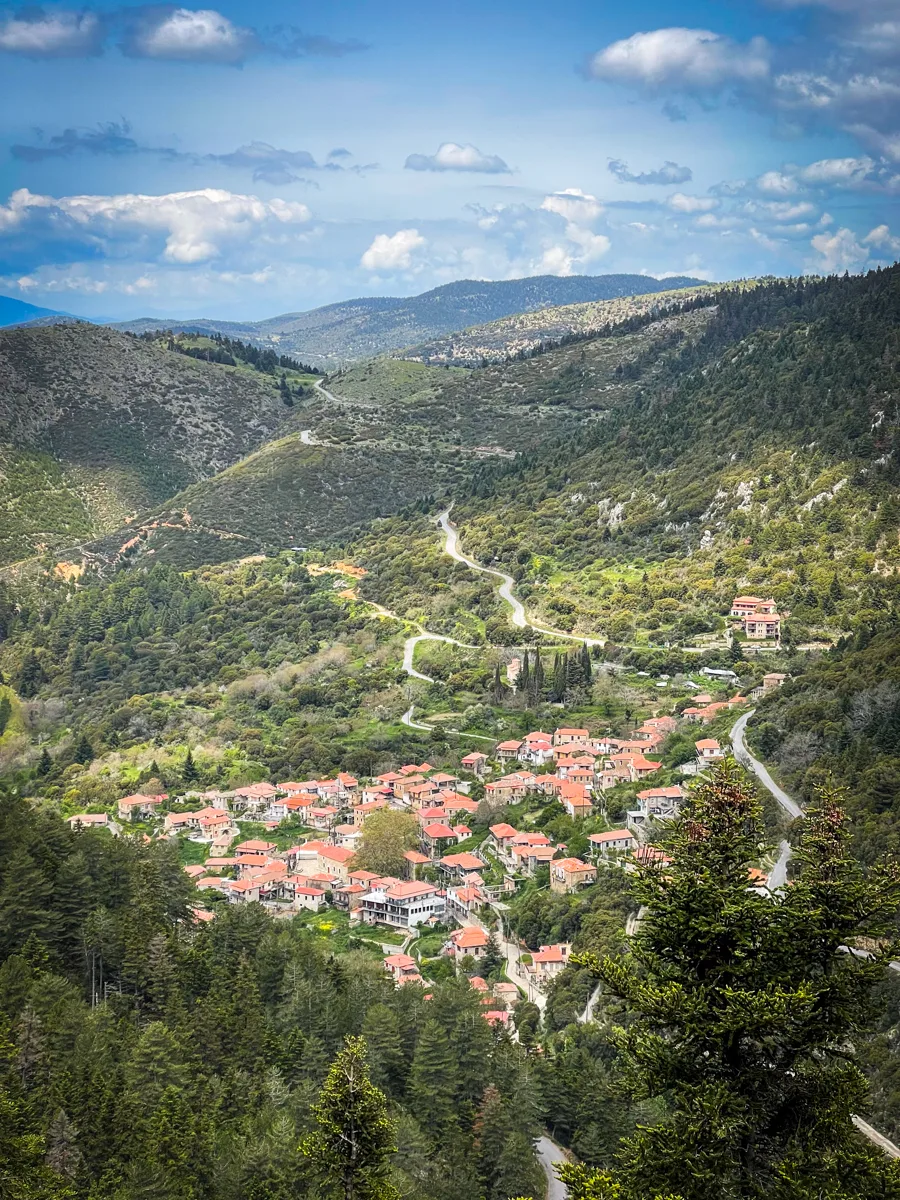
Tsintsina from above, as seen from the Saint John the Baptist chapel.
Today the year-round population of Tsintsina is four. And this is only a recent return for these people. Between 1950 to 2015, the school-year population of the village was zero.
The school has been closed for decades, the doors are all barricaded and padlocked. I was there on a Sunday morning in April and the church sat quiet. No bells, no families, no priests.
I’m told that in the summer months, the town still gets glimpses of its former glory. Children who grew up here return from Athens, driving along the newly paved highway to air out their parents’ old houses or to visit one of the few grandparents who still call Tsintsina home.
But when I was here in late spring there was almost no sign of life. My hotel, Prytaneío, is just on the edge of town at the top of a hill. When I got to my room I went straight out onto the balcony. You could see the village’s winding main street, all the way to the church. I waited for someone to pass by below. Peeked into the windows of some of the stone buildings that blended into the dusty hills. No one appeared.
For dinner, we headed to the restaurant in town, Taverna Koukounari. It’s only open on the weekends during the year, but in summer they’re open most days of the week.
We weren’t the only patrons in the restaurant. At the back sat an older man reading the newspaper, a carafe of red wine to one side.
The owner of the restaurant is a woman named Ifigenia. Like many of the part-time residents of Tsintsina, Ifigenia lives in Athens with her family. She’s an artist. Her work dons the sign outside the restaurant. She comes back here to run this restaurant because while Athens is where she lives, Tsintsina is home.
All of the recipes at her restaurant are her grandmother’s or her mother’s or her aunt’s or her great aunt’s. These recipes have been in her family, been in Tsintsina, for generations.
Plate after plate was brought to our table. First, it was the cheese wrapped in pastry and the creamy fava beans. Then we made room for the spinach and cheese inside a pita-like bread as deep as a cake tin. We pushed the veggies aside to make space on the table for the steaming plate of stewed beef. Of course, we cleared enough space for bottles of red and white wine.

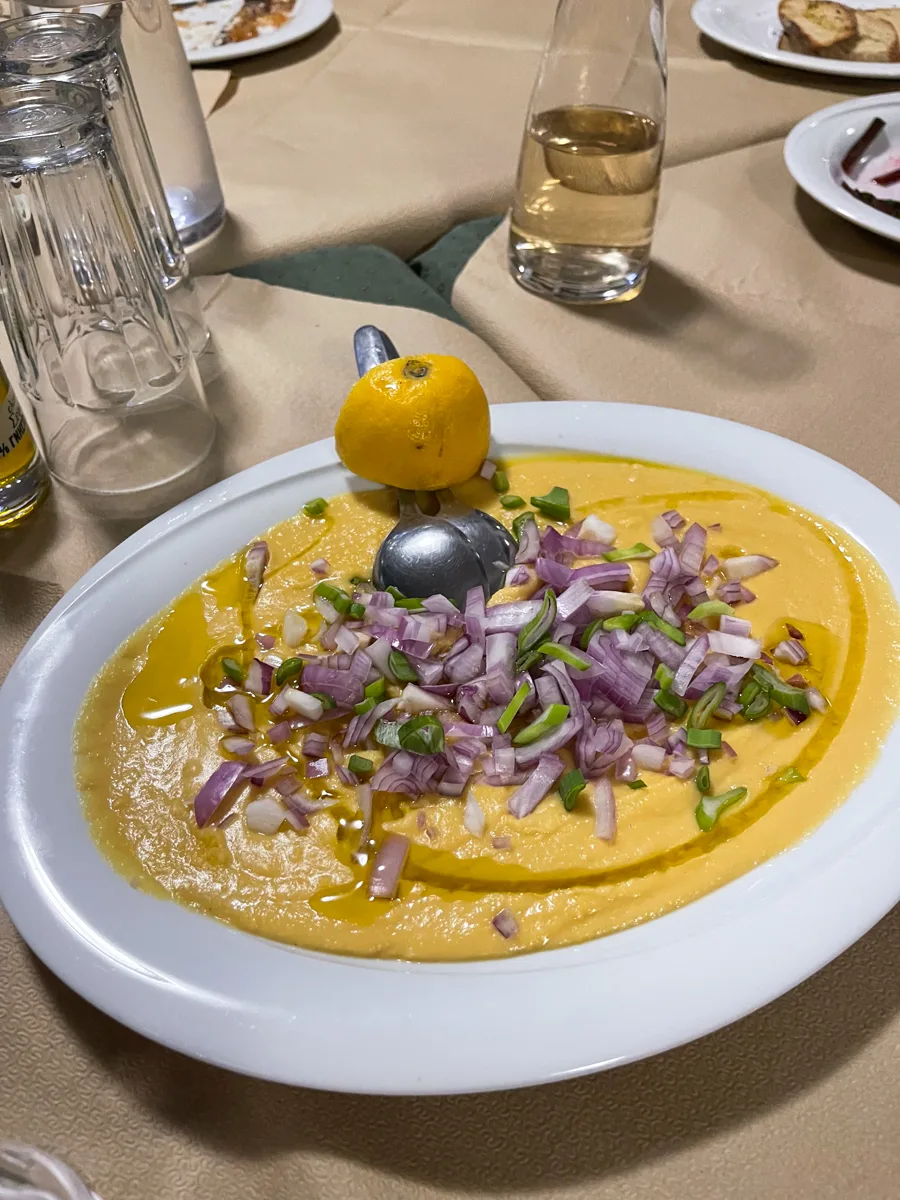
The dips, roasted vegetables, and salads were all so fresh and packed with flavor. One of my favorite things about food in Peloponnese is that its all about the local, seasonal ingredients.

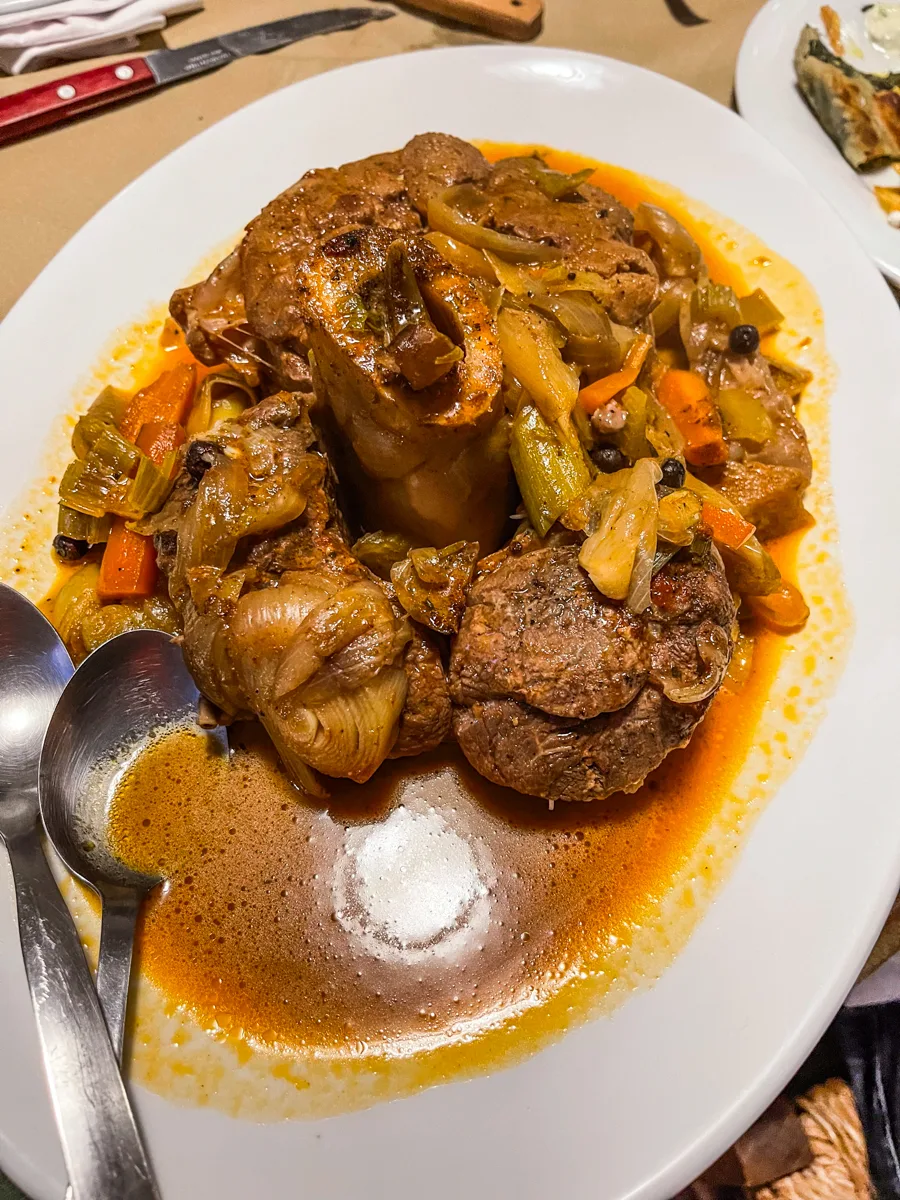
The star of the show that night was this slow cooked meat with rich gravy.
Eventually, the table was full and so were we. We sat with Ifigenia for hours, the old man continuing to read the paper and sip his red wine behind us. Every once in a while Ifigenia would chat to him in Greek, translating our conversations. In turn, he would tell her to tell us more about this vibrant old town.
And so she did. Stories of how she used to hike up into the mountains with her friends on hot summer days, drinking from the local fresh springs and staying out until it was nearly dusk. That was when they knew it was time to go home and help with dinner.
Stories of how full the town is in the summertime, especially on the weekends. Stories of long tables in the street right outside the restaurant, the only real street to speak of in the entire town. Full of people dancing and eating, chatting and singing. Catching up on what they have been up to for the last 12 months, laughing with friends they have summered with their entire lives.
There’s a part of me that is jealous of Ifigenia. What it must be like to have a place like this to return to, where people have known you your entire life. Where you feel so at home, so welcomed. A place with so much life and love.
You could feel how passionate she was about it when she spoke. It was impossible not to feel like I too was part of this place, even just for the brief 24 hours that I resided in it. Around that table full of food and stories and laughter, fueled by many now-empty carafes of red wine, I got the chance to feel exactly what it must be like to be in a place with so much love and life.

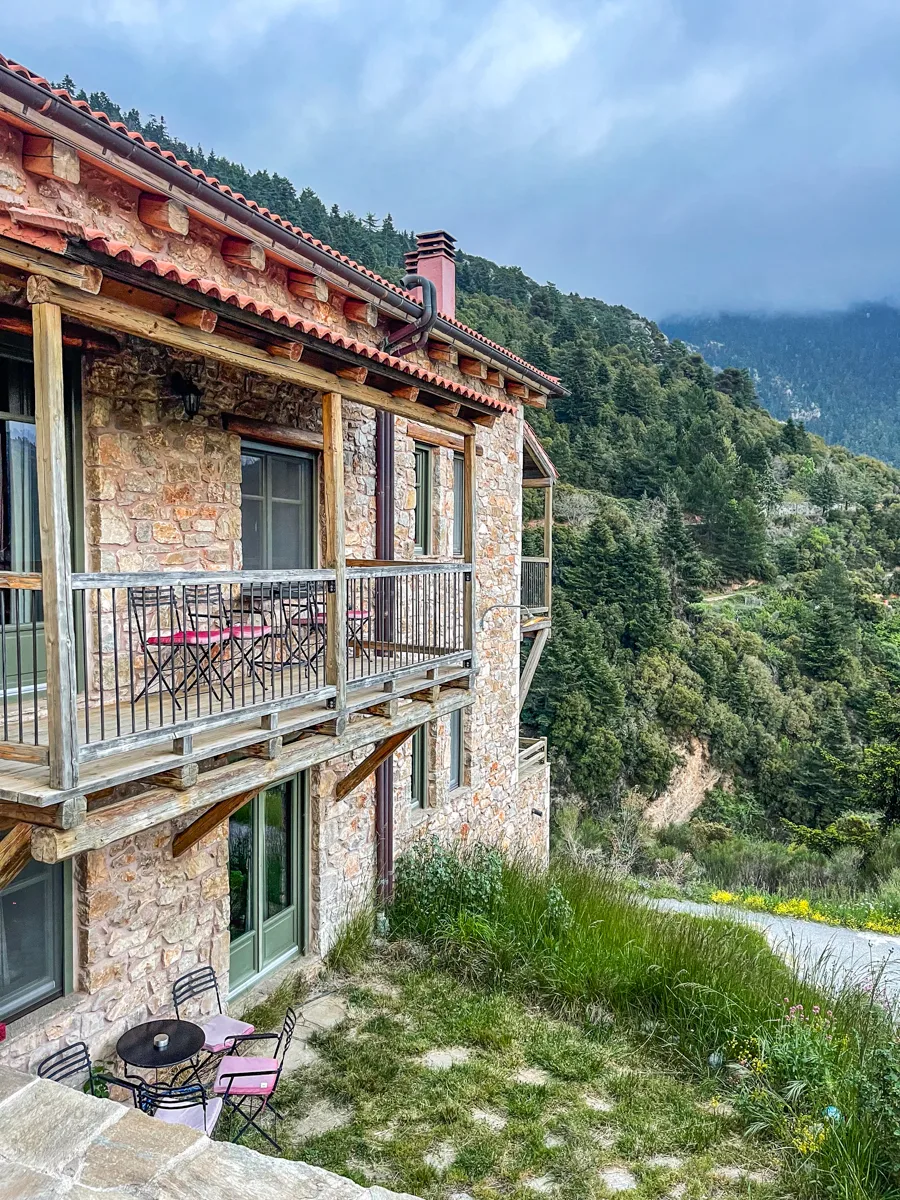
The Hotel Prytaneio is one of the most beautiful that I have stayed at in Greece.

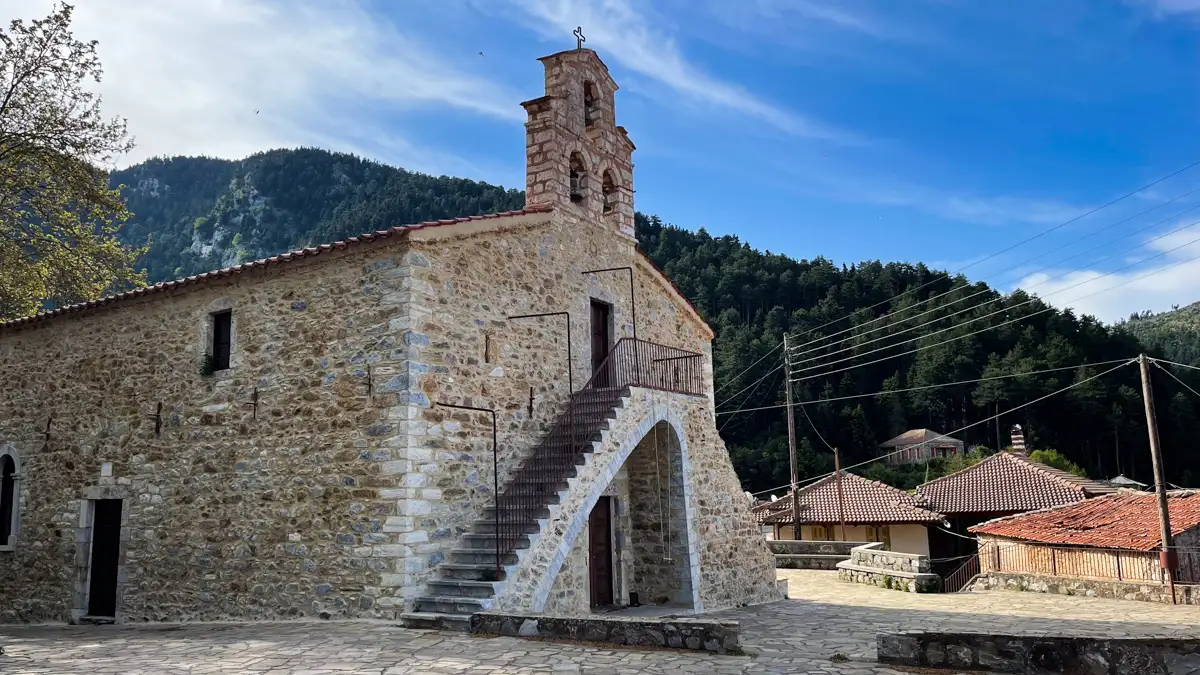
The church in Tsintsina on a very quiet Sunday morning in April. I hope to come back some summer day and see it bustling with people!
How you can visit Tsintsina
The Peloponnese is full of quiet old villages like this one. I urge you to spend some time exploring a few of them, especially if you enjoy hiking or eating or wandering through historical towns without any other tourists. A few others that I love include Kosmas, Tyros, and Dimitsana.
But Tsintsina is special because of the people and you should not miss a meal and a chat with Iphigenia. The hiking here is also some of the best that I’ve experienced. You can easily add Tsintsina to a Peloponnese itinerary that includes stops in Nafplio and Leonidio.
You will need to rent a car, which is best done from Athens airport. The highway between Athens and the Peloponnese was finished in April 2017 and allows you to get here in about three hours if you don’t stop along the way at places like Corinth or Tripoli.
I highly recommend staying at Prytaneío on the hill. The views from the rooms are unmatched in town, the breakfast is exceptional, and the prices during the off-season are very reasonable. Book a stay at Prytaneío here.
Be sure to hike up to Saint John the Baptist. It’s steep, but not a very long walk. It takes about 30 minutes to get to the top from the road below and it offers the best views in the area. If you are visiting in the shoulder season, you’ll likely have the place all to yourself.
Finally, if you are visiting during the shoulder season, be sure to come on a weekend so that you can enjoy dinner at Taverna Koukounari. Say hi to Ifigenia for me.
Watch My Tsintsina Experience