
Tibet is a country that is so packed with natural beauty, history, and culture that once you visit, you’ll wonder why it took you so long to get here in the first place. Then you’ll promptly be trying to figure out how you can return.
Tibet is home to over 7,000 monasteries and is often called the Roof of the World, as most of the country sits at over 13,000 feet (4,000 meters) above sea level.
Traveling to Tibet isn’t perhaps as simple as hopping on a plane to somewhere in Europe, but with a little bit of advance planning, you’ll soon find that it was worth it.
You cannot visit Tibet without a guided tour that is operated by a licensed Tibetan agency. You must also apply for a Tibetan Travel Permit as well as a Chinese Visa, unless you are from one of these countries that have visa-free travel in China.
You can apply for a Chinese tourist visa in your home country, but your Tibetan permit must be done through the Tibetan travel agency that you book your tour with. They will help you easily acquire it, so it’s not a big stress at all.
Now let’s consider the 10 best places to visit as you plan your Tibet travel experience.
1. Potala Palace
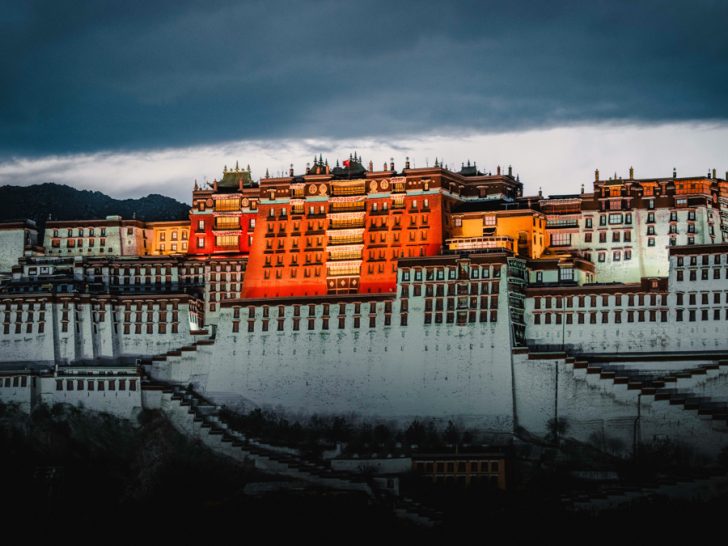
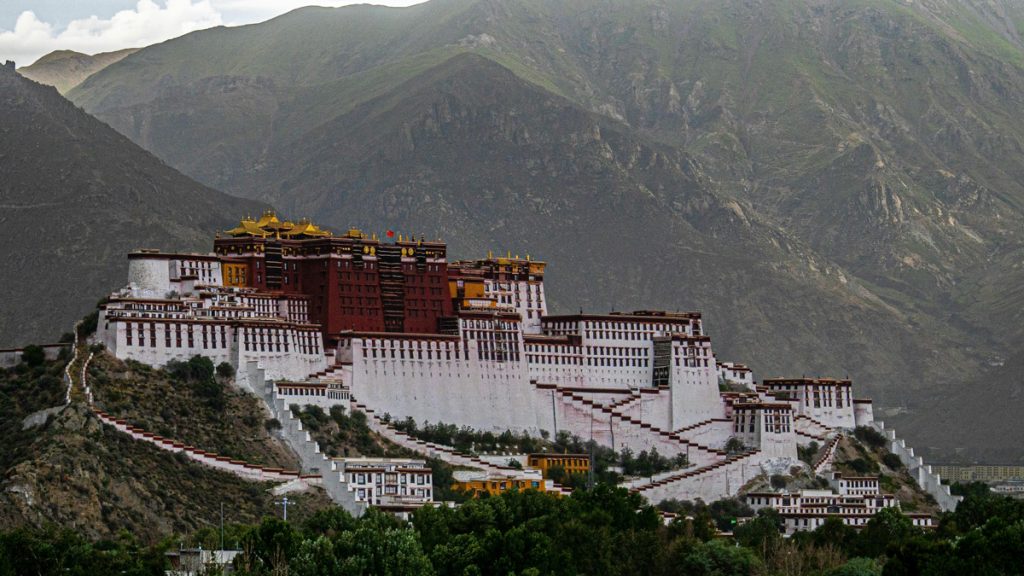
Most tours start in the capital city of Lhasa, home to Potala Palace, the most iconic building in all of Tibet.
Formerly the winter palace of the Dalai Lamas, it is now a museum and UNESCO World Heritage Site. It’s also in the Guinness Book of World Records for being the highest palace in the world, sitting at 12,139 feet (3,700 meters) above sea level!
Inside the museum, you’ll discover 698 murals along the inner walls depicting the history of Tibet, religious scrolls painted on silk, and stunningly embroidered tapestries.
2. Jokhang Temple & Barkhor Street
Also located in Lhasa, Jokhang Temple is considered the holiest temple in Lhasa, and Barkhor Street circles the temple. Each morning between 9 am and 10 am, people walk the circuit, spinning prayer wheels and chanting mantras.
Inside Jokhang Temple, look around to discover the intricate wood carvings and colorful murals. There is a life-sized statue of Shakyamuni Buddha along with an incredible rooftop where I highly recommend spending a little bit of time taking it all in.
3. Sera Monastery
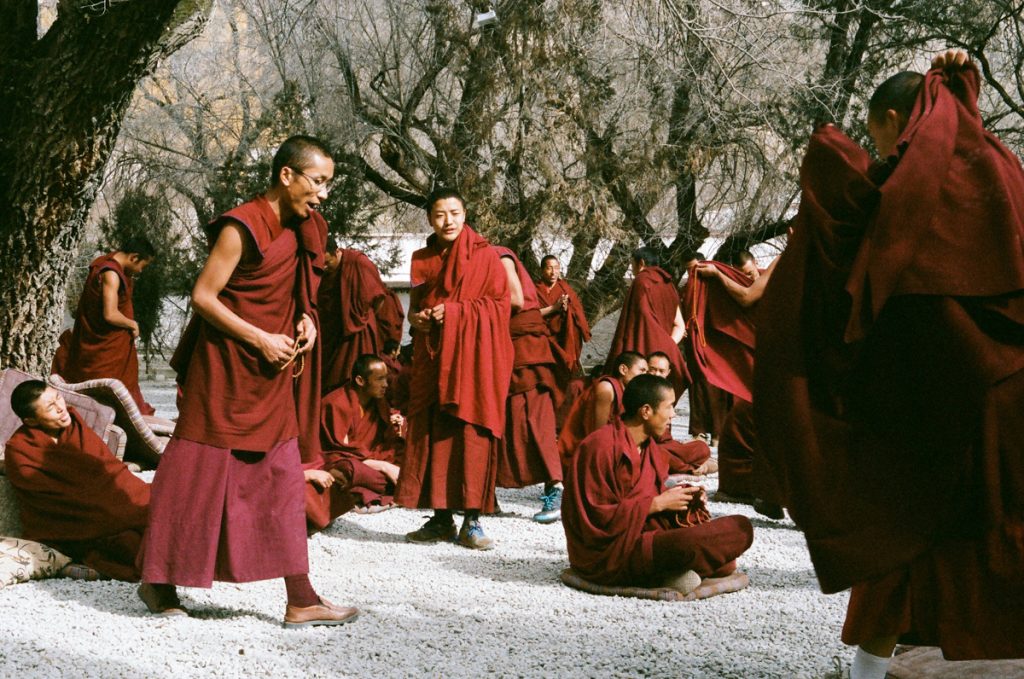
Sera Monastery is most famous for its monk debate. Monk debate is an animated conversation between monks of Buddhist knowledge and is a way for young monks to learn through challenging discussion.
Despite the debates being conducted in Tibetan, you will still be highly entertained by the way in which these dramatic debates take place. There is often booing, big hand gestures, and the loser removes his hat until he can beat the other monk in the next debate.
In addition to the monk debates, Sera Monastery is worth visiting to explore the incredible library and see the unique architecture.
4. Yamdrok Lake
As you head out of Lhasa, Yamdrok Lake is often one of the first stops. It will be the first of many sights of natural beauty along your Tibet tour.
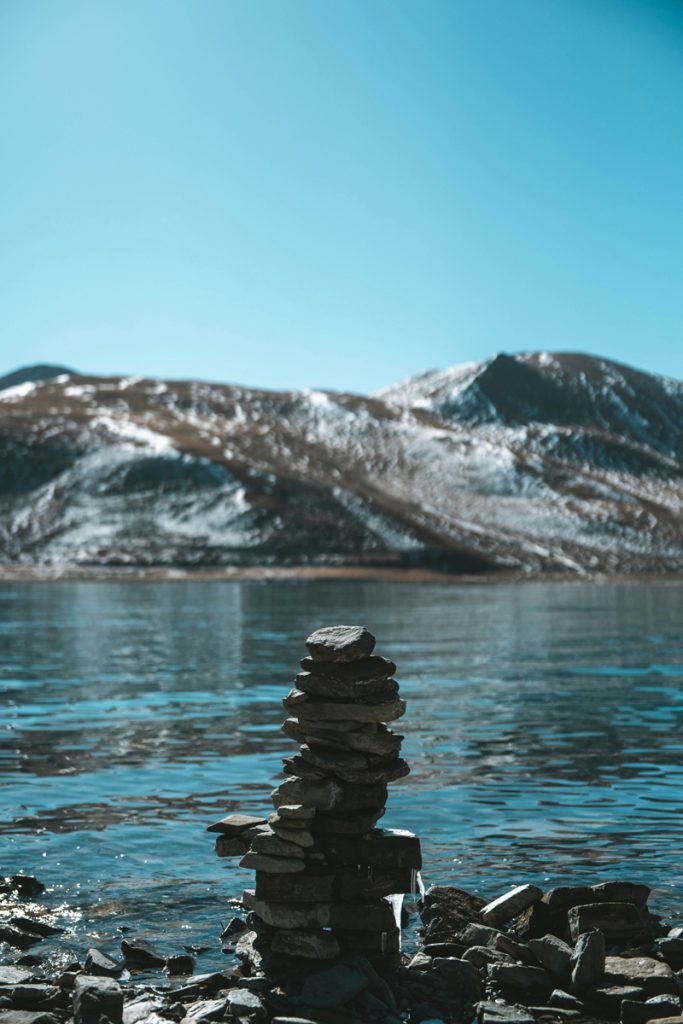
Located at 14,570 feet (4,441 meters) above sea level, it is the highest freshwater lake in Tibet. It is known best for its turquoise color and the surrounding snow-capped mountain range.
There are 21 islands in the lake, and many of them have monasteries. Both the lake and these islands are considered sacred in Tibetan Buddhism.
The lake is believed to be the home of the female deity, and many Tibetan people visit the lake as a spiritual pilgrimage, making offerings here to seek blessings for health and prosperity.
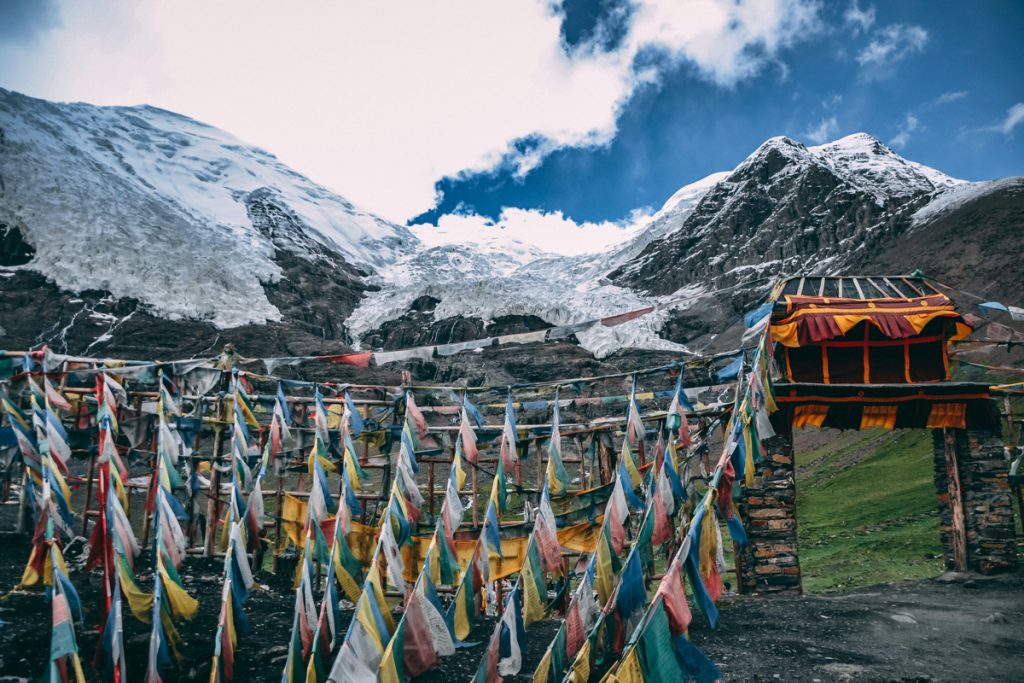
5. Karola Glacier
At an altitude of 18,241 feet (5,560 meters), this glacier will literally and figuratively take your breath away. Despite its staggering altitude, it is one of the most accessible glaciers in Tibet, making it an easy stop on a Tibet small group tour.
The Karola Glacier has an enormous ice wall that descends from the Noijin Kangsang Peak and can easily be seen from the road.
6. Gyantse
Once an important trading hub on the route between India and central Tibet, Gyantse is one of Tibet’s best-preserved historic towns.
There are three major landmarks not to miss while you’re in town: Pelkor Chöde Monastery, the Kumbum Stupa, and the hilltop Gyantse Dzong Fortress. All overlook the valley and give incredible views, but they also each give more of a glimpse into the town’s history.
7. Tashilhunpo Monastery
Tashilhunpo is one of the largest and most impressive monasteries in all of Tibet. Located in Shigatse, Tibet’s second largest city, this is a highlight of any trip to Tibet.
It was originally built in 1447 by the first Dalai Lama, Gedun Drupa. Walk the kora, or sacred path, around the monastery to soak in both the exterior architecture and the incredible views of Shigatse that you get from here.
8. Mount Everest Base Camp
The north side of Base Camp is one of the best things to do in Tibet for mountain lovers. This side offers some of the most expansive views of Mount Everest
If you choose a tour that takes you all the way to base camp, your best chance of seeing a clear view of Everest is in the winter. So pack all of your layers and be ready to see one of the most majestic sites in the world.
9. Rongbuk Monastery
Located just below Everest Base Camp, at 16,909 feet (5,154 meters), this is the world’s highest monastery. It’s also home to another astonishingly amazing view of Mount Everest if the clouds don’t get in your way.
Built in 1902, the monastery was used in early expeditions as travelers stopped here to receive the blessings of Rongbuk’s Head Lama before attempting their epic climbs.
10. Gyatso La Pass
A simple roadside stop, those who want one more epic view of Mount Everest will not want to miss a photo opportunity here.
The pass is the highest point along the Friendship Highway, which is the main road that runs through the country and one you will no doubt become familiar with during your time in Tibet.
It’s often impassible from June to October, so you can only add it to your Tibet must-see list if you are visiting during the warmer summer months, but if you are lucky enough to drive this pass, you will perhaps be rewarded with even more incredible views of Mount Everest.