
When I first started traveling back in 2010, almost all of the plans I made were based on the recommendations in my New Zealand Lonely Planet.
I read that book cover-to-cover before Luke and I moved there after graduating from college. I made a list of all of the places that I knew I wanted to go. I made a note of which ones would be easy day trips from our new home base in Christchurch and of the ones that would be easy weekend getaways.
In 2015, when I left my job in South Korea, I planned 5 months of travel using a Lonely Planet guidebook and two blogs – one of my favorite travel blogs, This Battered Suitcase, and the other a guy who lived in Taiwan and blogged all about his experiences there (he’s no longer blogging unfortunately!)
It never occurred to me to Google things or to watch YouTube videos about them back then. All of the information I needed was in guidebooks and at local tourist centers. I regularly used to seek out local tourist offices in places that I traveled to in order to learn about things to do in the area.
Traveling in an age of overinformation
Oh, how times have changed!
There are not only thousands of travel blogs on the internet, but there are also millions of social media posts, YouTube videos, and opinions out there about the best place to travel to, what you absolutely cannot miss, and restaurants where you will wait in line for hours to have the must-have dish at that location.
As a content creator, I am definitely to blame for some of this. I have dozens of articles on this website titled “the best restaurants” or “the best things to do” because that is how people use Google. To be found on the Internet, I need to write article titles that answer people’s questions.
Are they the best? That’s entirely subjective. They are the best places that I have been to in that destination. But it takes time to find a blogger or Instagrammer with whom you feel aligned and whose opinions you trust to be similar to yours.
All this to say, I have struggled in the last year or two to find people whose travel style aligns with mine when I am visiting a place for the first time. I have turned more and more to YouTube, but often it doesn’t give concrete recommendations for restaurants.
I also feel so overwhelmed by how much information is out there on Instagram. When I search a destination on social media, most of the top posts are of the same few photogenic places or cafes that could be anywhere in the world.

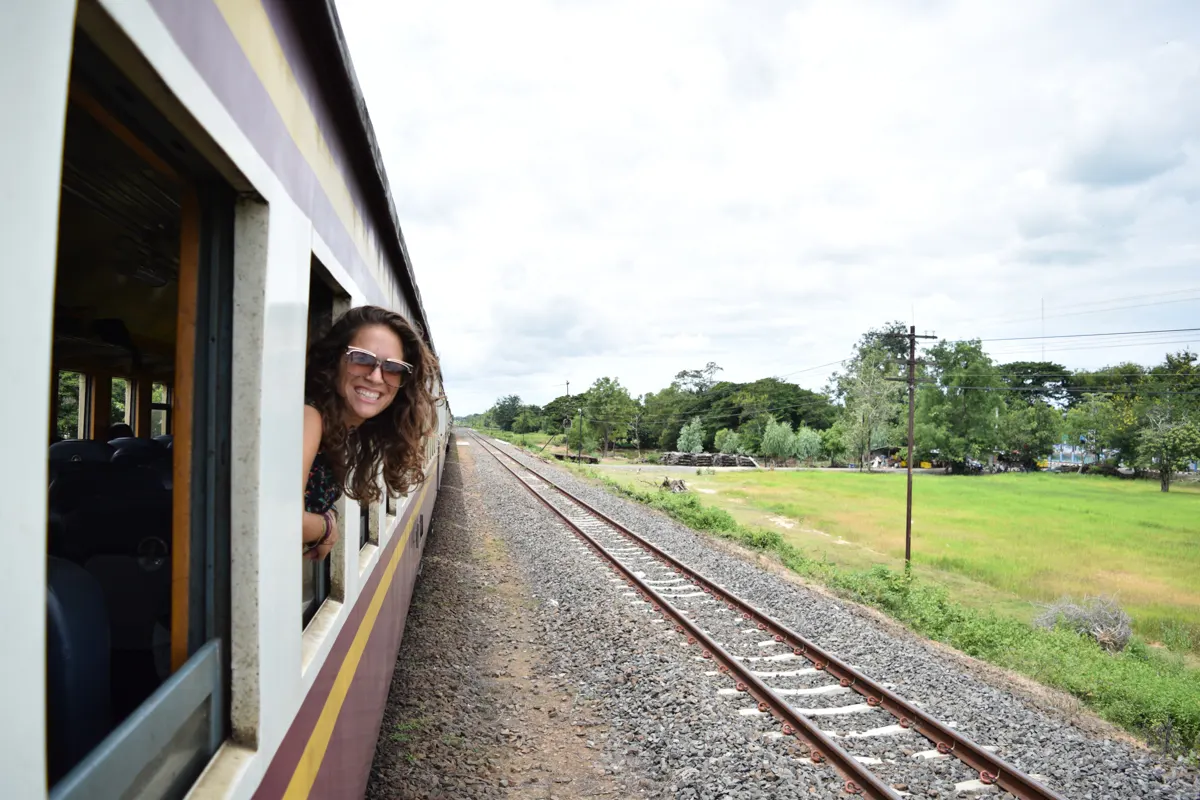
Taking a train in Thailand because a couple that we met in Laos told us it was a fun way to travel around the country. They were right!
How I plan my travels in 2025
In the past two years, I have gone rogue on using the internet for travel planning in the way that I used to.
These are the different ways that I save money on flights and hotels, find the best places to stay at a good price, and plot out where to go, what to eat, and how to get off the beaten path a little bit more.
How I Choose the Destination
I think this is one of the hardest decisions to make about going on a trip. Do you revisit a place you love? Do you go somewhere completely new? Do you return to a country you love, but go somewhere different within that country? Do you just go back to Paris because it doesn’t get any better? (only kidding, sort of!)
For the most part, I choose the destination I’m going to travel to because it’s somewhere that I have had on my list for a while. There are huge trips that I dream about like climbing Mt. Kilimanjaro, going hiking in Patagonia, or visiting Everest Base Camp (I guess I really like hiking vacations). These trips require a good chunk of time off and a big budget.
But there are also beaches that I hope to visit, smaller cities and destinations around the world that are more affordable and tend to be higher up on the “reality” list.
The two main factors I consider when planning where to go on a trip are:
- Time of year: I don’t want to go to Mexico in the middle of summer or to Asia during the wet season, or hiking in South America in the middle of winter. So I know that if I am planning a trip in July, I’ll likely look in North America or Europe. If I’m planning a trip in November or December, I might consider Mexico or other parts of Latin America. January and February are good times of year to visit Southeast Asia, etc.
- The cost of the trip: The overall cost of a trip is a huge part of my decision-making, and the way that I get somewhere, usually by airplane, plays a huge role in where I decide to go for my trip. For example, last Christmas Luke and I wanted to revisit Oaxaca, but flights cost more than $2,000 each. So instead, we went to Valladolid and Cozumel, where the flights were under $1,000 each. Last May, I wanted to go to the Oregon coast, but I had planned the trip too late and the only hotels that were left were more than $300 per night, so I went to Orcas Island instead, another place that was high on my travel list and that had waterfront Airbnbs for less than $100 per night.
I use these two factors to narrow down the places that I want to visit, and then there are usually one or two clear winners on the list.

Japan was an absolute bucket list trip that we saved for and planned extensively, and it was a dream come true.
For Cheap Flights
I use a few different websites to find cheap flights, but my number one favorite flight alert site is Daily Drop Pro. They send me weekly flight sales from my home airport for both domestic and international flights and for both economy and business class prices.
I have booked super cheap flights to LA with them ($78 round trip with Delta!) as well as great-priced flights for an upcoming trip to Vegas. They have some amazing deals for European destinations, which I am hoping to take advantage of later this year.
I’ve seen flights from Seattle to Lisbon for under $500 round trip, flights to Norway for $650 round trip, and even to Tokyo for under $800 round trip. The website works best for those who have flexibility with their vacation days because the price drops come and go quickly.
You can join Daily Drop Pro here for a set price of $99 per year. If you book even one international flight with this website, it pays for itself.
If there are no deals on Daily Drop Pro for the trip I want to take, I head to Google Flights and check out what options are available there. This is the best place to start a search that I have found. I used to like Skyscanner, but it has changed for the worse, and I find the prices unreliable.
If there is a flight on Google Flights with Delta, then I will go onto the Delta website and book that directly because I have a Delta Skymiles credit card, and I earn more points and build towards status.
Delta is by far my favorite US airline, and while it would make more sense for me to be a loyal Alaska Airlines user since they are based in Seattle and have the most flight options, I just don’t like them as much and avoid flying with them when I can.
Researching Neighborhoods to Stay in
Once I know the city, town, village, or island that I’m going to be visiting, I start researching where I should stay. Not the exact hotels, but the neighborhoods.
This mostly pertains to visiting cities, which is often a big part of my travels. I love exploring cities of all sizes, and it’s always more important to me to be in a good neighborhood than it is to be in a good hotel (good is subjective, of course).
This type of information is something I still trust to bloggers. I will head to Google or Duck Duck Go and search for “best neighborhoods in Atlanta,” if I’m planning a trip there and want to know the best neighborhoods to stay in as a tourist.
Another thing that I will do is head to Booking.com and see where the majority of the boutique hotels are located. This is a good gauge of where the cuter, more stylish neighborhoods in the city are.
If I know someone who has lived in the place that I’m visiting or has been there recently, I will reach out to them and get some advice on which neighborhoods would be best as a base for exploring the city.
I like to have at least two or three neighborhoods on my list so that I don’t narrow my search too much and have a wide range of hotels and rentals to choose from.


How do you narrow down the cool, interesting, and affordable neighborhoods?
For Affordable Hotels
My number one choice for searching for hotels and apartments is Booking.com. I have used their website to book hotels at the best prices for about four years now.
I used it whenever I traveled around Lithuania or other parts of Europe while we were living there, and I use it all the time when I am booking hotels around the US.
When you are a frequent user of Booking.com, they reward you with different levels of what they call their “Genius” status. The higher your Genius level, the better the prices on many hotels across the site.
Booking.com also allows you to view hotels within the map of the city, which allows me to find hotels in the neighborhoods that I want to stay in. Then I filter by price to find the best options in the price range that I want to pay.
I always check to see if the hotel is available on Chase Travel, because I have the Chase Sapphire card and find that the best use of my points is often on hotels (though this depends hugely on where the hotel is in the world).
If I can book the hotel with points on Chase, that is usually how I book the hotel, but not all hotels on Booking.com are available on Chase Travel (which uses Expedia).
Finding Restaurants
This has become one of the most frustrating things to do as a traveler who loves food. I used to spend hours and hours researching the best restaurants, the top street food stalls, and the local foods that I should be eating while I’m there.
I still look up what the local foods are in every destination that I travel to. Whether it’s Lyon, France or Oaxaca, Mexico, I want to make sure that I know the names of the traditional foods that can be found in these different places.
I usually find the answers to this pretty easily with a Google search. More often, I even ask ChatGPT to sum up the local foods in that place and tell me about each of them so that I also know what they are and some of their history.
Then I use Google Maps and scroll around the areas where I know I’m going to be spending time. What local cafes are around my hotel? Which ones have the best reviews? I will look at the pictures to see if it looks like the type of coffee or pastries that I like. Then I will pin it the map so that I can revisit it easily while I’m traveling.
I do the same with restaurants. When I was going to Atlanta last year, I looked up “lemon pepper wings” on Google Maps, and it showed me all of the restaurants that had lemon pepper wings on the menu. I pinned the ones that had the best reviews and had pictures of the wings that looked the tastiest.
What restaurants are around the museums where I’m going to be close to lunchtime? What bars look cool and have the sort of vibe that I like? It’s so easy to tell that from a few photos and from the reviews that people leave.
I also ask for recommendations once I get there. The hotel staff usually directs you to the most touristy places, so I tend not to ask them. I ask the people at the coffee shops and the bartenders at a local spot that I visit on my first night. Where do they like to eat? What’s their favorite place on a sunny day? Where would they take their friends who were visiting them? Those are the best recommendations.


Cinque Terre has long been on my bucket list, so when I found $20 round-trip flights to Milan from Lithuania a few years ago, I figured out the logistics of getting here by train and saved on hotels by staying outside of the park area, and had an AMAZING trip here.
How to Find Cool Things to Do
I still use guidebooks. They aren’t as good as they used to be. You can’t plan your whole trip with a Lonely Planet like I did back in 2010. They have a lot more filler and photos than they used to, but they still have the important basics and often some really great neighborhood and activity recommendations.
My personal favorites are the Moon Guides because they are almost always written by a person who is local to that area or who is an expert in that region.
I usually reserve the Moon Guide for the place I’m going from the library if they have it. Otherwise, I will get a Lonely Planet or a Fodor’s Guide. If there are independent authors who have a book about that destination, that’s the best because they will usually give the best insight into a place (if I do say so myself!).
More often now, I visit the tourism board websites of the destination I want to visit. Some tourism boards have wonderful websites like Travel Nevada or My Helsinki that are full of recommendations, itineraries, and historical information that will make your trip even more enjoyable.
When I’m traveling around Europe, I almost always stop into the local tourism board office when I arrive in a new city because they have SO much information and so many wonderful recommendations for things to see and places to eat.
Other Ways I Save on Travel
If you live in the US and you still don’t have a travel credit card, you are leaving free travel points on the table.
This is not a green light to get into debt. I pay my credit card bill off every single month. However, I use my three travel cards to pay for absolutely everything so that each dollar I spend allows me to earn up to 3x points or miles that I can redeem for free travel.
All but one of my cards is free. One of them charges me a $95 fee per year, which I more than make up for in the thousands of dollars of free travel that I get from the points that I use.
- This is the general travel card that I use and have loved for many years which I have booked SO much free travel with including hotels, rental cars, and flight upgrades.
- I use the Bilt Card to pay my rent and earn points that I can convert 1-to-1 for airline miles.
- I have been a long-time Delta Skymiles credit card user. In fact, this was my very first credit card! I use this whenever I’m booking a Delta flight and rack up miles to use for free flights throughout the year.